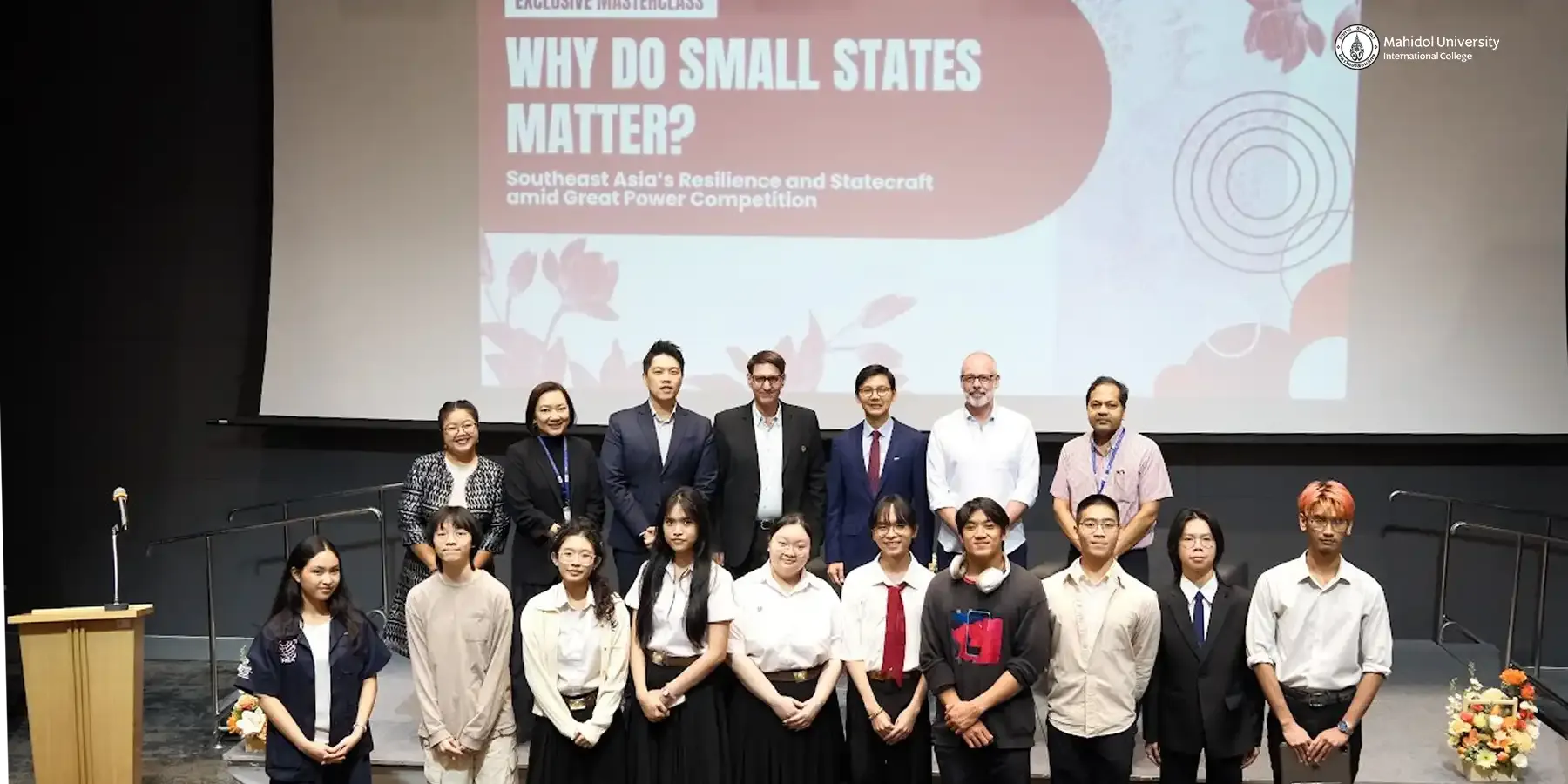
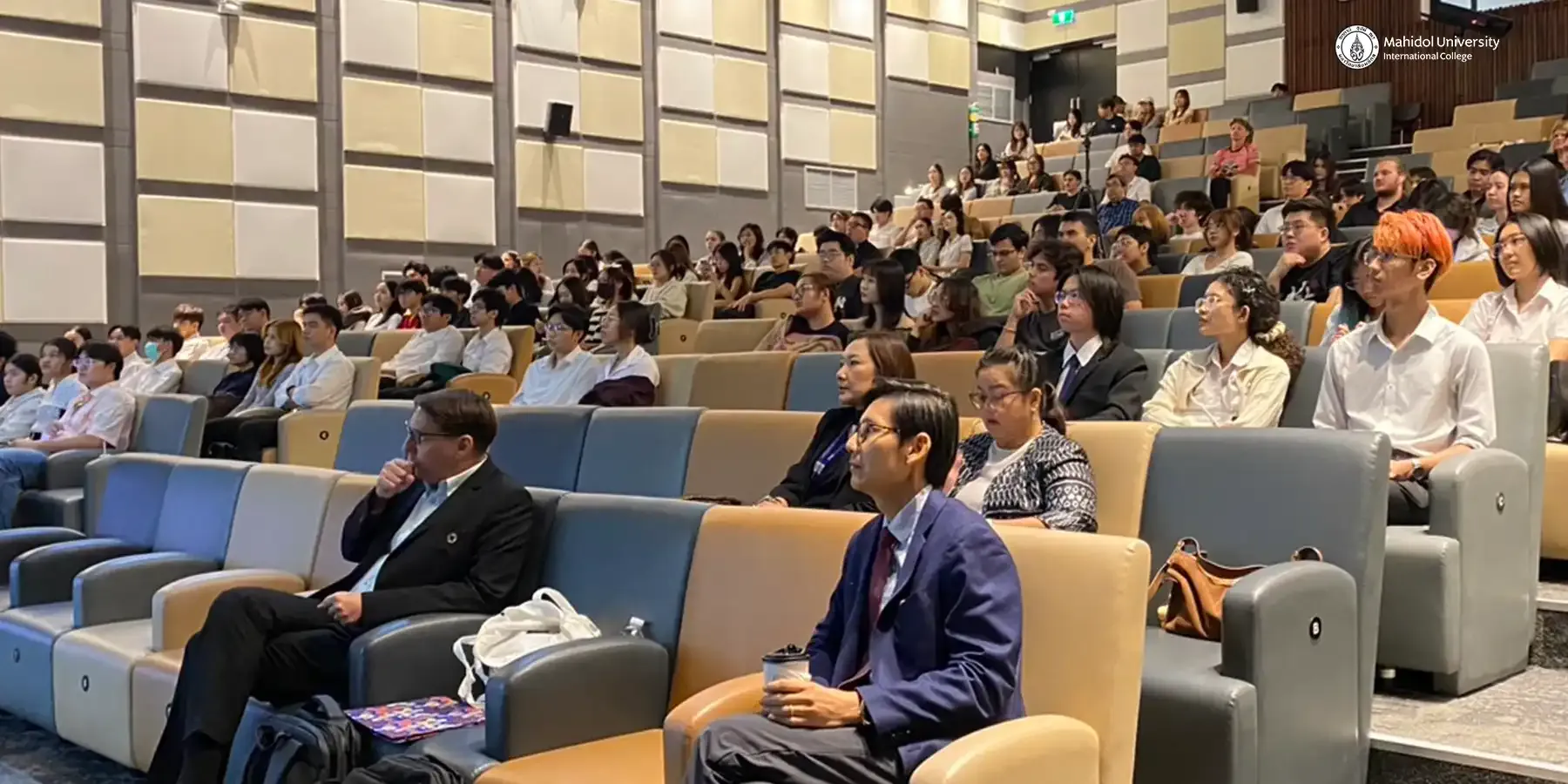
For centuries, students of international politics have been taught a stark realist maxim: the strong do what they can, and the weak suffer what they must. On November 12, 2026, however, professors and students at Mahidol University International College (MUIC) gathered to challenge that conventional wisdom, examining how smaller nations actively shape the balance of power in the Indo-Pacific region.
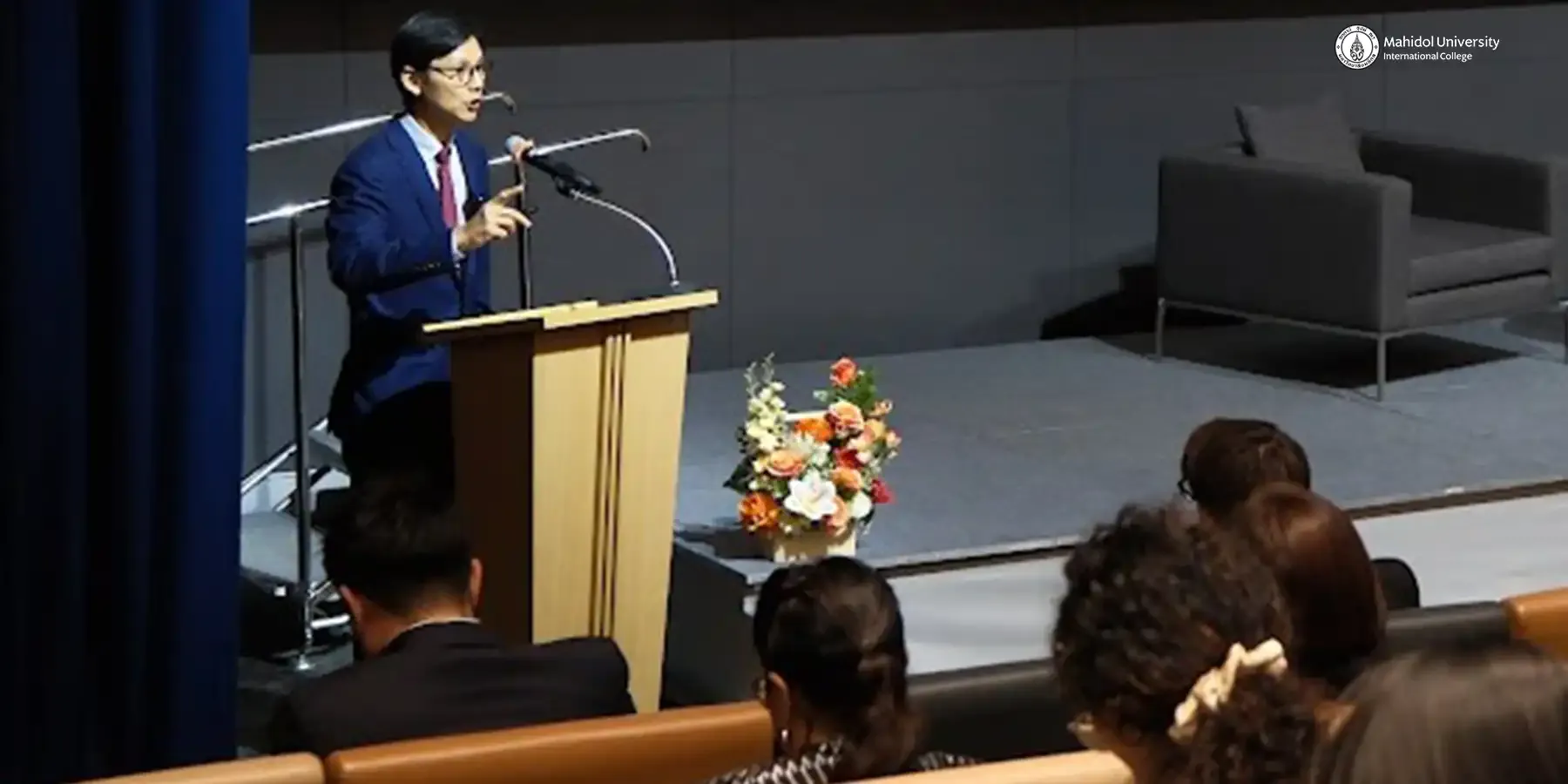
Hosted by MUIC’s International Relations and Global Affairs (IRGA) Program in partnership with the Lee Kuan Yew School of Public Policy at the National University of Singapore (NUS), the masterclass—titled “Why Do Small States Matter? Southeast Asia’s Resilience and Statecraft amid Great Power Competition”—took place at the Spectrum Screening Room on the 5th Floor of the Aditayathorn Building. Leading the session was Assoc. Prof. Huang Chin-Hao, Director of the Centre on Asia and Globalisation at the Lee Kuan Yew School of Public Policy, NUS.
Mr. Christian Oesterheld, Chair of the Social Science Division, gave the welcoming remarks. Mr. Desmond Seow Shao Yee, Deputy Head of Regions of the Lee Kuan Yew School of Public Policy, NUS, shared with the audience the different graduate programs of their institution along with the requirements and admission procedures.
Opening his lecture, Assoc. Prof. Huang laid out a three-part presentation challenging mainstream narratives around superpower rivalry. First, he argued that relying on the classic "strong versus weak" dichotomy obscures the real influence smaller nations wield. Second, he contended that both the United States and China are "missing the forest for the trees" in their bids for Indo-Pacific leadership. Finally, he emphasized that policymakers frequently understate the decisive weight of Southeast Asia’s own interests, preferences, and priorities.
To illustrate the pressures facing the region, Huang contextualized the strategic drivers of both superpowers. Beijing’s foreign policy, he explained, is fundamentally anchored in maintaining domestic legitimacy. This requires strengthening the credibility of the Chinese Communist Party, delivering on its "Two Centenary Goals," and preserving a stable external environment during what Beijing views as a vital period of strategic opportunity to sustain economic growth. Washington’s posture in Asia, by contrast, is driven by the overarching imperative to retain its regional and global primacy as the world’s leading superpower.
Caught between these competing ambitions, Southeast Asian nations have developed a distinct approach to statecraft. Huang outlined three core principles defining the small-state perspective: treating strategic diversification as a foundational rule of diplomacy, actively minimizing vulnerability to great power coercion, and expanding economic and strategic engagement with as many external powers as possible rather than choosing a single camp.
In the final segment of the masterclass, Huang synthesized why small states hold far more leverage than material metrics alone suggest. Dismantling the notion that "might makes right," he noted that coercion alone cannot sustain international order. Instead, a great power’s true authority depends on the deference of smaller states—and it is ultimately those smaller states that confer upon great powers the legitimacy and the right to lead.