


From Social Science to Education: The Journey Behind Farang Angmor
Could you briefly introduce yourself and share your journey since graduating from MUIC?
After graduating from MUIC, I began my career as a freelance educator, teaching part-time while exploring opportunities in communication and education. Although I was not very confident at the time, I knew I genuinely enjoyed helping people learn.
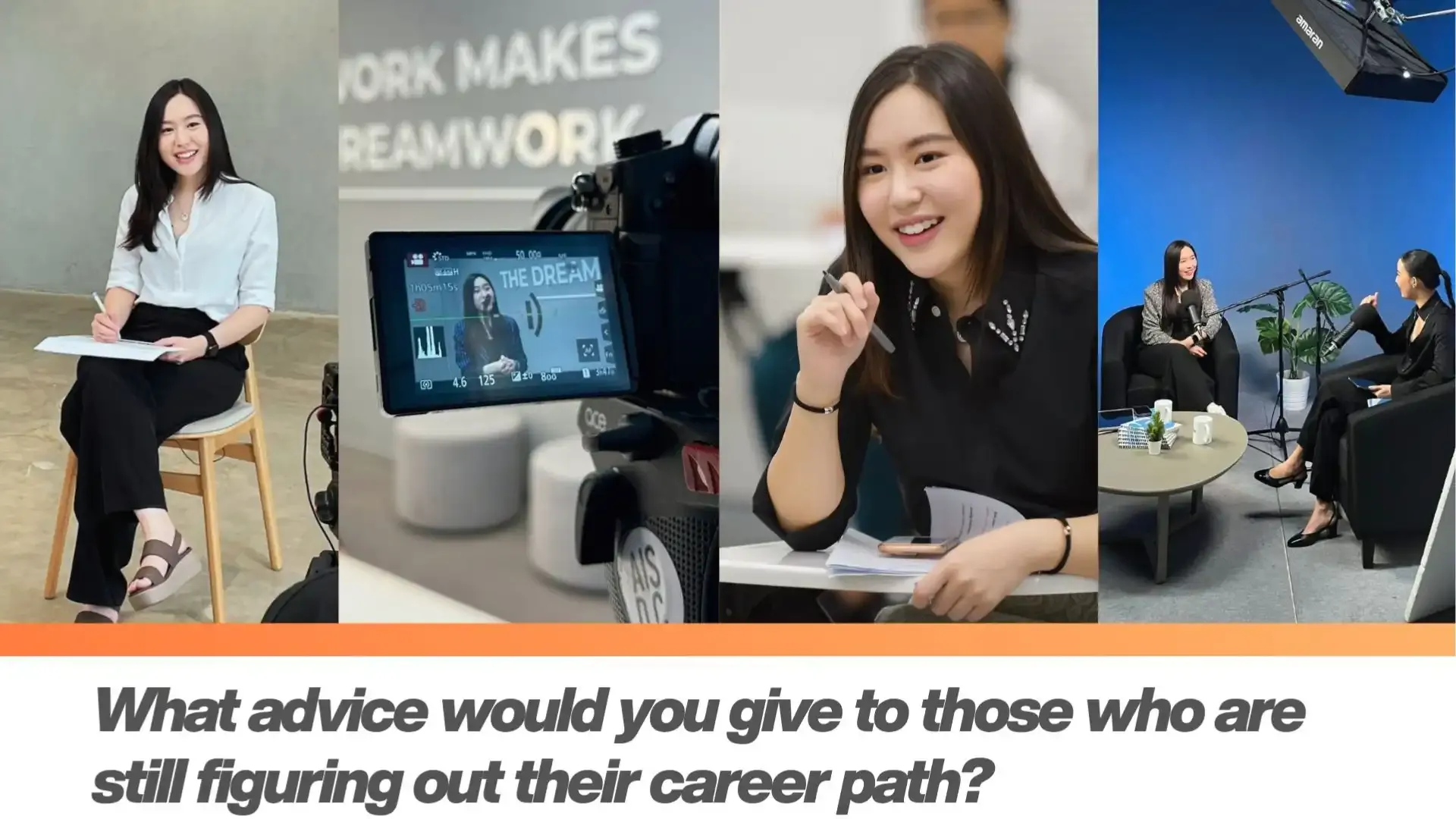
Today, I work as an educator and learning journey designer, focusing on English communication, professional communication, and generative AI. I also create educational and edutainment content to make learning more accessible for Thai learners.
A major turning point came when I started the “Farang Angmor” Facebook page about a year after graduation. Despite many doubts at the time, that small decision gradually grew into a learning community with over one million followers across platforms, reaching learners both in Thailand and abroad.
Looking back, how did studying Social Science at MUIC influence the path you chose after graduation?
I chose to study Social Science because I have always found human beings fascinating. I wanted to better understand people, society, and the factors that shape how we think, behave, and live. Even today, I still believe that the more we understand people, the more we can find meaningful ways to serve and contribute to society.
During my time at MUIC, I became especially interested in education. Through many courses and discussions, I started to realize that many societal outcomes, whether problems, innovations, or social change, are often deeply connected to education and how people are given opportunities to learn. That realization strongly influenced the path I chose after graduation. It made me want to contribute, even in small ways, to improving how people learn and helping education become more accessible, effective, and empowering for others.
What’s one moment from your time at MUIC that still stays with you today?
It is honestly difficult to choose just one moment because my time at MUIC was filled with meaningful experiences and supportive people. I remain especially grateful to many of the ajarns and staff members who encouraged and believed in me throughout my journey, including Ajarn Deekana Tipchanta, Ajarn Matthew Copeland, P’Ket, and P’Tone, among many others. Their support taught me that while talent and perseverance are important, having people who genuinely uplift and guide you can make a lasting difference in your life.
If I had to choose one pivotal experience, it would be receiving the MU Ambassador Scholarship to study Educational Psychology at the University of Wisconsin–Madison during my senior year. That opportunity broadened my perspective on education, learning, and cultural diversity. It opened my eyes to how differently people learn across cultures and how transformative education can be when supported by thoughtful research and understanding. That experience became a major inspiration for the work I do today in education and learning design.
In what ways did your time at MUIC shape both your career direction and how you see yourself today?
My time at MUIC shaped both my career path and the way I see myself today. Studying Social Science taught me important lifelong skills, especially critical thinking, analytical thinking, and the ability to continuously unlearn and relearn.
MUIC also helped me grow beyond my self-doubt. I was not a very confident student, but the university gave me opportunities to conduct research, present projects, and connect with inspiring people. Those experiences helped me realize that you do not need to be great from day one. With the right environment and willingness to learn, people can grow far beyond what they initially believe they are capable of.
What inspired you to start “Farang Angmor” and create educational content online?
I started teaching as a tutor during my college years mainly as a way to help ease the financial burden on my family. Over time, I realized that I genuinely enjoyed teaching and helping people learn.
My biggest inspiration to start “Farang Angmor” was actually my mom. At the time, I was already preparing lessons and teaching students, and she challenged me to think bigger. She asked whether I could share the things I was already teaching online so that more people could benefit from them. I remember doubting myself a lot because I did not feel knowledgeable or confident enough to publish educational content publicly. But my mom simply told me that if my work could help others, then there was nothing to lose by trying.
It was not a perfect or well-planned beginning at all, but I am very grateful that I decided to take that first step.
When creating content, how do you balance making it both engaging and educational?
Honestly, I do not think I have a perfect formula for balancing educational and engaging content, and I still feel like I am continuously learning how to do it better. What I try to do most is think from the audience’s perspective.
I often ask myself questions like: If I were the learner, would this feel relevant to me? Would it feel too overwhelming or difficult to understand? Would I feel encouraged that I am capable of improving? I try to keep these thoughts in mind throughout every step of the process, from choosing topics and writing scripts to speaking and editing.
At the end of the day, I simply hope that the content feels approachable enough for people to keep learning and believing that they can grow.
Why do you think the way we learn today needs to evolve?
I think education today has already evolved in many ways, but there are still some limitations in how mainstream learning is designed. In many systems, we are still relying on an industrial-era model of education that was created for a very different world.
At the same time, every learner is different. People have different goals, interests, backgrounds, and ways of learning, so a one-size-fits-all approach may not always help everyone reach their potential. Today, technology gives us more opportunities to support personalized and flexible learning in ways that were not possible before.
I also feel that many learners are still taught to focus heavily on memorization rather than developing essential lifelong skills such as critical thinking, communication, creativity, and adaptability. For me, these skills are at the heart of meaningful learning.
I believe that if we can continue improving the way people learn, more individuals may discover capabilities and potential they never realized they had, and that can create positive change for society as a whole.
Every career comes with its own challenges. What has been one of your most challenging moments, and what did it teach you?
One of the biggest challenges in my career has been navigating a path that does not have a clear roadmap. The kind of work I do today did not come with an exact step-by-step path to follow, so there were many moments when I felt uncertain, doubtful, or discouraged about whether I was moving in the right direction or making meaningful progress.
At the same time, I have learned that uncertainty can also create freedom. Because there was no fixed path, I had the opportunity to explore ideas, create new initiatives, and build projects that felt purposeful and meaningful to me.
Running my own educational platform and business has also taught me a great deal about responsibility and risk-taking. You have to make difficult decisions and accept that not everything will go as planned. However, it has also given me the opportunity to shape my own direction and contribute to society in a way that feels authentic to who I am and what I value.
What advice would you give to those who are still figuring out their career path?
I do not know if I am fully qualified to give advice, but if I could say something to my younger self, it would be this: do not feel pressured to figure everything out as quickly as possible.
When I was younger, I used to think of career success as a destination that you eventually arrive at. Over time, I have started to see it more as a journey of continuous learning, growth, and exploration. Careers are often much more dynamic and unpredictable than we imagine. Even when you find something meaningful, you will continue evolving along the way.
I think it is okay to try things, explore different paths, make mistakes, and start again. Sometimes the process of exploring teaches you just as much as reaching the goal itself. If there is something you genuinely care about, give it your best effort so you can learn and grow from the experience. In the end, one of the most valuable outcomes of any journey is who you become through it.
Motto:
“Growth begins when you believe you are capable of learning and improving.”
Ms. Pongpisuth Jongudomsuk
MUIC Class of 2017
Major: Social Science
Position: Educator, Founder of Farang Angmor, and Content Creator
The Untold Story – MUIC Alumni Chapter 29 | PDF