


Chapter One: The Spark (1986-1996)
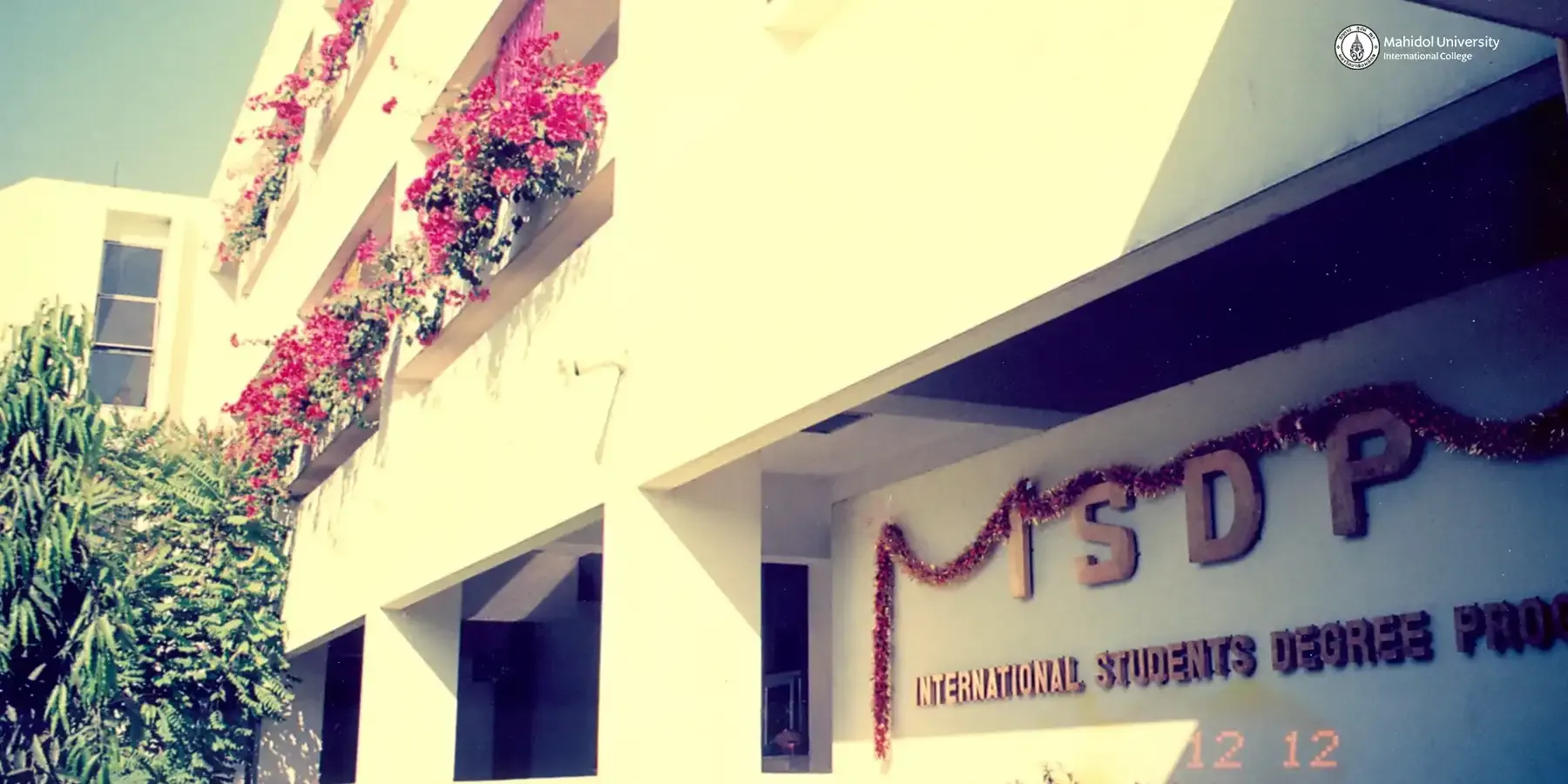
A Dream Takes Root It began as a gamble in 1986: 45 students, two professors, two rented classrooms, and an audacious vision. In the midst of Thailand's economic surge, forward-thinking leaders at Mahidol University envisioned an international program to prepare students for a rapidly changing world. After a year of passionate debate, the International Students Degree Program (ISDP) was born. Its home was modest: two rented classrooms, a few offices, and a small library in the Faculty of Social Sciences building.
Forty-Five Pioneers and a Leap of Faith Despite offering an ambitious 13 majors, ISDP’s inaugural class consisted of just 45 students who enrolled in six core programs: Biology, Chemistry, Applied Mathematics, Physics, Computer Science, and Travel Industry Management. A single full-time faculty member, soon joined by another and supported by guest lecturers, led the instruction. It was an intimate and exhilarating environment where these first students were not just enrollees—they were pioneers. By 1989, 18 of them constituted ISDP’s first graduating class.
Steady Growth, Bold Dreams The program’s success quickly became evident. By 1990, enrollment reached 300, and by 1992 it had climbed to 486, prompting the addition of Business Administration and Food Science and Technology majors. That same year, ISDP inaugurated its first dedicated building—a three-story structure (now Building 2) that symbolized its permanence and ambition.
By the mid-1990s, the program had reached a milestone of 1,000 students and 15 majors. It had outgrown its "program" status. In 1996, a decade after its founding, the Mahidol University Council officially elevated ISDP to Mahidol University International College (MUIC), granting it full faculty status. The gamble had paid off.
Chapter Two: Building the Foundation (1997-2007)
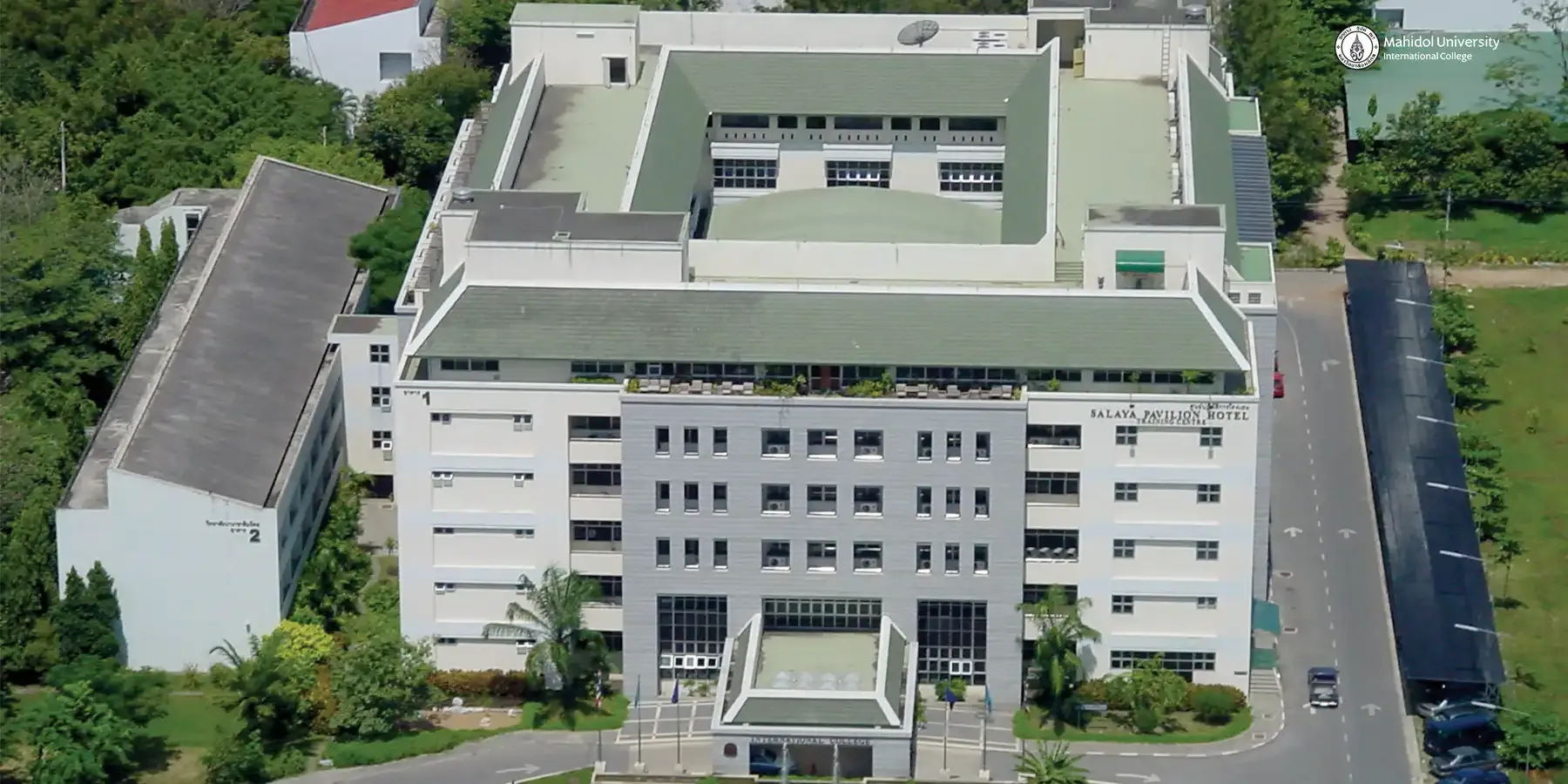
A Campus Comes Alive As the new millennium dawned, MUIC was riding a wave of momentum. By 1998, with enrollment swelling to nearly 1,600, the college inaugurated a stunning six-story building (now MUIC Building 1) that became its new heart—aside from classrooms, it boasted computer and science laboratories, a seminar room, an auditorium, a spacious cafeteria, and more faculty and administrative offices. This was more than just an academic facility; it was designed for education through immersion. The sixth floor housed the Salaya Pavilion Hotel and Training Center, a fully functional hotel where hospitality students gained hands-on experience. The Herb Garden Restaurant and Cup-pa Coffee House (opened in 2001) provided further real-world learning venues.
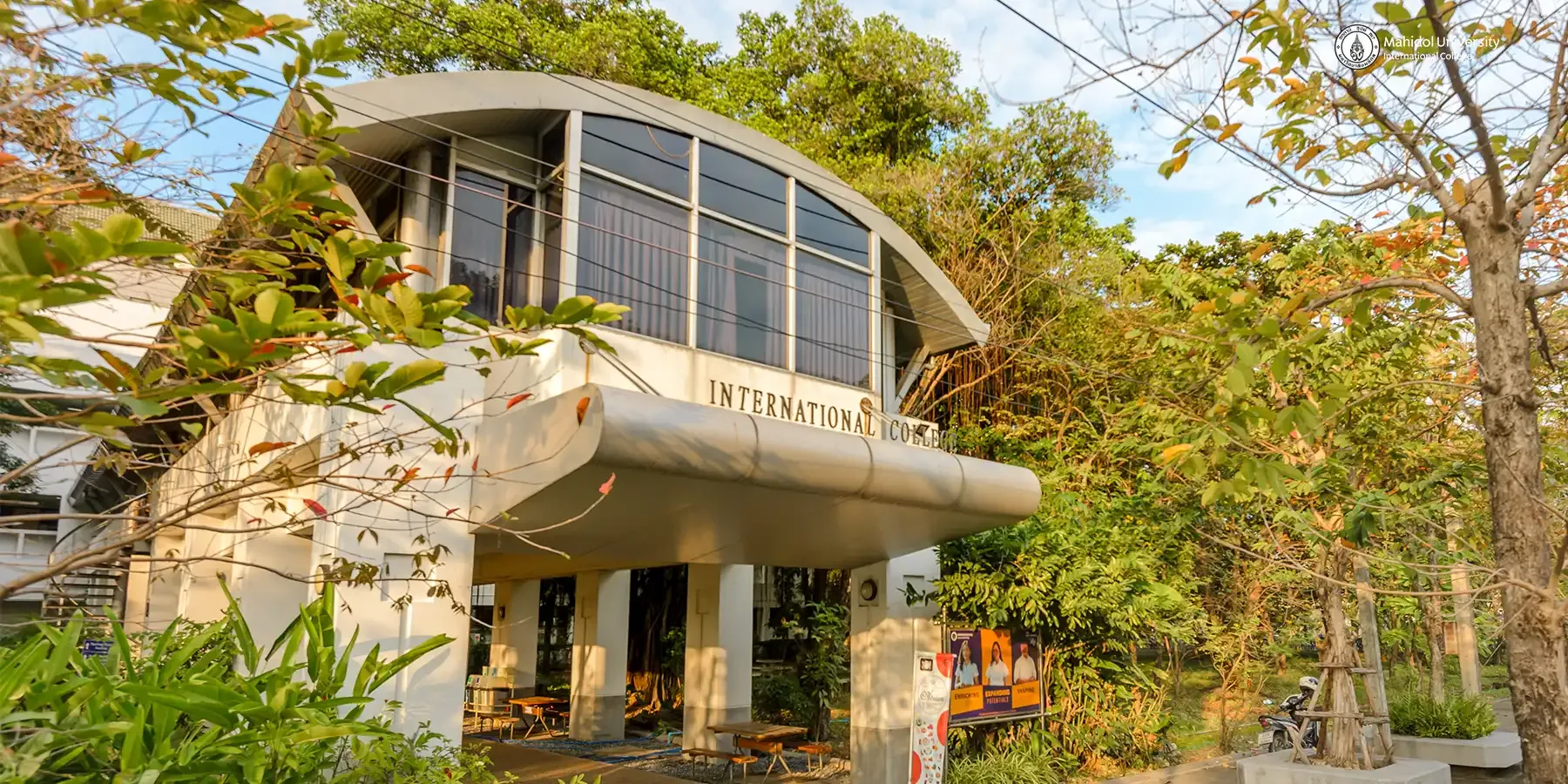
The campus continued to expand. In 2005, the Food Science and Technology program received a dedicated home complete with a processing laboratory, and by 2006, the eight-story Building 3 provided more classroom space and expanded hotel facilities.
Academic Explosion MUIC's physical expansion was matched by an academic renaissance. The college launched its Social Science program in 1998, followed by Southeast Asian Studies in 1999. A watershed moment came in 2000 when the Business Administration program elevated five concentrations into full majors: Finance, Information Systems, International Business, Management, and Marketing.
By 2002, MUIC had reorganized into a divisional structure, paving the way for new majors in Environmental Science (2003) and Nursing Science (2004). In a bold creative leap, MUIC partnered with the Kantana Group in 2005 to launch a degree in Entertainment Media, which, along with Communication Design, formed the new Fine and Applied Arts Division by 2008.
Expanding the Mission MUIC’s ambitions now extended beyond undergraduate education. In 1998, it established the Pre-College Program to prepare high school students for university-level work. A decade later, the Graduate Center opened in Bangkok's business district, offering MBA and MM programs. Simultaneously, the college launched its Study Abroad Program in 1998, weaving an international network that would become a defining strength and requiring expanded housing for a growing number of inbound exchange students.
Chapter Three: Recognition and Growth (2008-2018)
Awards, Accolades, and a Test of Character By its 20th anniversary, MUIC had earned a national reputation for excellence. In 2010, the college received the Creative Academy Award, followed by the Prime Minister's Export Award and the Thailand Trust Mark in 2011. This was recognition not just of academic quality, but of MUIC's role as a bridge between Thailand and the world.
But 2011 brought an unexpected test. Catastrophic floods submerged central Thailand, suspending classes. In this crisis, the MUIC community showed its character. Inbound exchange students, faculty, and staff were relocated to Mahidol’s Kanchanaburi campus. The college rallied, emerging more united than ever.
Going Global As the floodwaters receded, MUIC doubled down on its international mission. MUIC launched recruitment roadshows in 2014 across several countries in Southeast Asia, and six programs earned ASEAN University Network Quality Assurance (AUN-QA) certification, a stamp of regional excellence.
Enrollment surged to 3,500 by 2015, fueling two new majors: Intercultural Studies and Languages, and Media and Communication. The student exchange program flourished, and the number of outbound students jumped from 64 in 2011 to 114 in 2014. By that year, MUIC had agreements with 109 partner universities worldwide, one of which—Chiba University of Japan—opened an overseas office at MUIC in 2017.
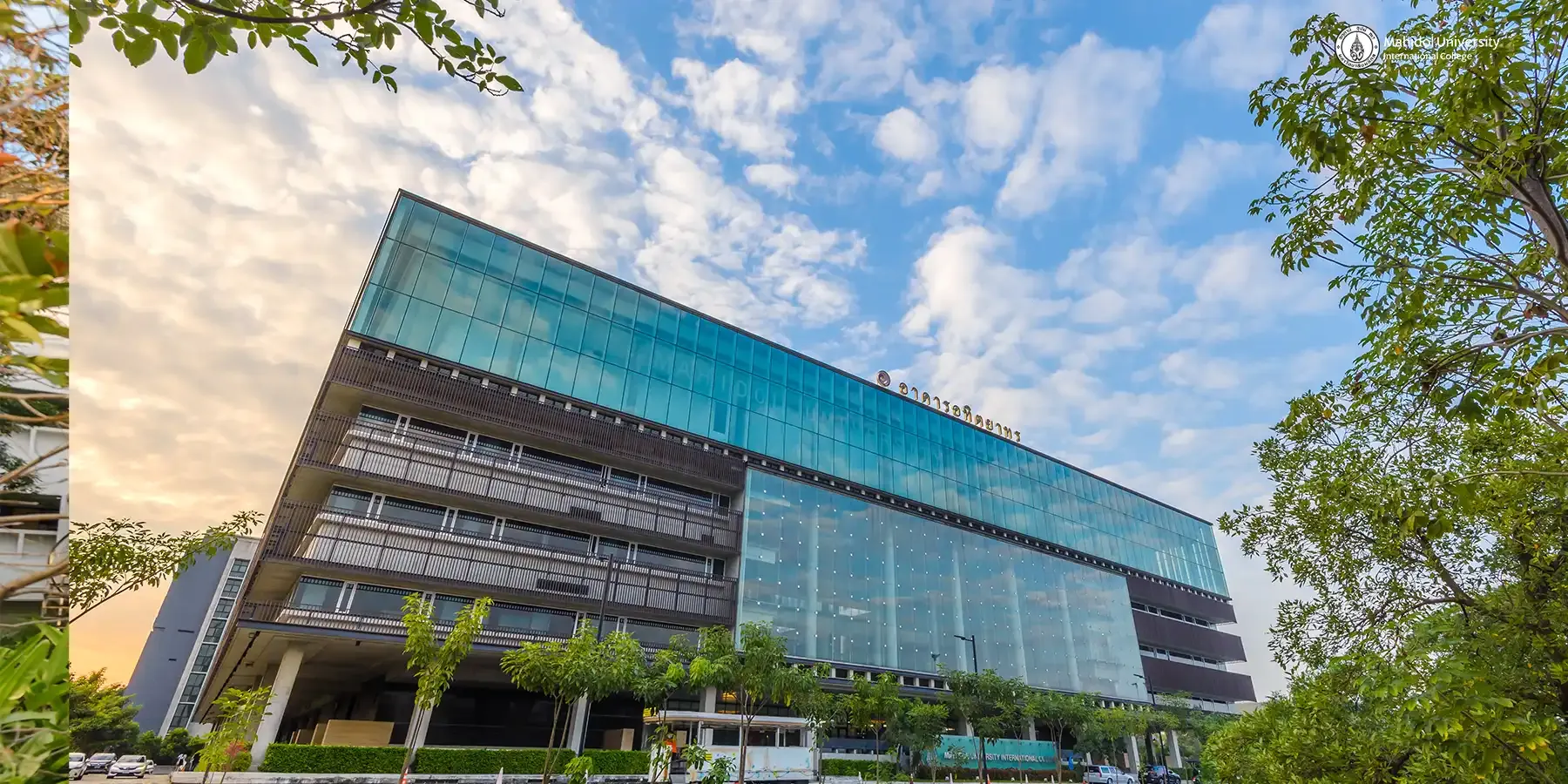
A Crown Jewel: The Aditayathorn Building Capping this decade of growth was the 2017 inauguration of MUIC's architectural masterpiece: the Aditayathorn Building, named in honor of alumna Princess Aditayadorn Kitikhun. Sleek, modern, and sustainable, the new building symbolized everything MUIC had become—and everything it aspired to be.
Chapter Four: Innovation & Transformation (2019–Present)
The Pandemic Pivot In early 2020, the Covid-19 pandemic brought unprecedented disruption. By March, MUIC shifted to remote learning—a transition that could have crippled a less agile institution. But MUIC adapted with remarkable speed. Faculty members were equipped with digital tools for seamless online instruction, while the administration provided scholarships to students facing hardship. After a period of hybrid classes, the campus returned to full in-person learning by mid-2022, having demonstrated its profound resilience.
Innovation in the Eye of the Storm Even as the pandemic raged, MUIC refused to stand still. In 2020, the college introduced the I-Design Policy, a groundbreaking flexible curriculum allowing students to customize their education by selecting at least 20 credits from any major, division, or partner institution. That same year, MUIC launched the Creative Technology major, a visionary interdisciplinary program blending arts, science, engineering, and music.
A Commitment to Excellence The past few years have seen MUIC's programs earn a dizzying array of international recognitions. Among the new accreditations, the Finance major joined the Chartered Financial Analyst (CFA) Institute University Affiliation Program (2019); the Chemistry program gained recognition from the American Chemistry Society (ACS) (2022); Computer Science, Communication Design (2022) and Media and Communication (2024) earned AUN-QA accreditation; and the Applied Mathematics major received a University Recognition Program - Bronze Level from the Casualty Actuarial Society (CAS) (2024). Key renewals included the Business Administration Division’s prestigious AACSB accreditation (2024); the Travel and Service Business Entrepreneurship (BM-TSB) Program’s UN Tourism.TedQual certification (2022); and the Preparation Center for Languages and Mathematics (PC)’s NEAS Quality Endorsement (2024). All of these further cemented MUIC’s status on the world stage.
A Truly Global Network Today, MUIC's network spans 140 partner universities worldwide, with approximately 500 inbound and outbound exchange students annually—a number the college plans to push to 600. This global web also offers students access to dual degree programs, graduate pathways, and medical school opportunities. As it enters its fifth decade, the college is also embracing the next frontier—artificial intelligence—with a dedicated committee exploring its ethical and effective integration into education.
Chapter Five: On to the Future
For 40 years, MUIC’s foundation has been academic excellence, global engagement, and resilience. Now, we accelerate forward. We are committed to an education that drives innovation, responsibility, and sustainability, equipping graduates to make their mark on a complex world.
“Empowering a Sustainable Society” isn’t just our theme—it’s our blueprint for the future.
Charting MUIC’s Rise: A Four-Decade Journey of Excellence
From being a program when it was founded in 1986 to a full-fledged college, Mahidol University International College (MUIC), indeed, has come a long way in the past 40 years. From its pioneering batch of 45 students, MUIC’s current population now reaches almost 4,000. Here’s a graph showing MUIC’s growth and development over the years as it continues to empower a sustainable society well into the future.
What began as a quiet dream in 1986 with just 45 pioneering students has blossomed into a global community. Over four decades, Mahidol University International College (MUIC) transformed from a small program into a full-fledged college, now home to nearly 4,000 students. This graph charts that remarkable journey of growth—a testament to MUIC's unwavering mission to empower a sustainable society well into the future, one student at a time.
Then | Now |
2 rented classrooms | 117 classrooms |
Renting in a building in MU Salaya campus | MUIC now has its own 4 buildings in MU Salaya campus |
45 students | 3,971 students
|
First Graduating Batch: 18 | Alumni: 14,587 |
2 full-time faculty members | 154 full-time faculty members |
13 majors | 17 majors, 7 concentrations, and 23 minors |