The MUIC Humanities and Language Division (HLD) is responsible for the Intercultural Studies and Languages major, also known as the ICIC Program. ICIC students can choose from three areas of specialization: the Foreign Language and Culture Concentration (FLC), the Literary and Cultural Studies Concentration (LCS), or the Ethics, Philosophy, and Economics Concentration (EPE). HLD is also responsible for all English Studies, Humanities, Foreign Language, and Physical Education courses in General Education. It also offers minors in Foreign Languages (Chinese, French, German, Japanese, and Spanish), Critical Cultural Literacy, Human and Artificial Intelligence, and Applied Ethics, Behavioral Analysis, and Social Engineering, and Cognitive Science: Language, Mind, and Brain.
In many industries and countries, the most in-demand occupations or specialties did not exist 10 or even five years ago, and the pace of change is set to accelerate.
Demand for workers with third-language skills is on the rise, and companies stand ready to offer them better pay.
How can students prepare for the world of tomorrow?
By understanding the diversity and complexity of today’s world and the increasing demand on thought and cross-cultural skills.
How can students prepare for the future of jobs?
By being multi-disciplinary, insatiably curious individuals who know how to model ideas.
How can students prepare for the coming age of intelligent machines?
By developing the essentially human qualities of critical thinking and complex interactivity that will be more important than ever. In the face of these challenges, the MUIC Humanities and Language Division aims to be the leading international undergraduate program in intercultural studies, and to provide quality teaching and learning in key parts of the GE Program.
To ensure that students have the foundational knowledge and essential skills to thrive in work environments that are evolving faster than ever, the Humanities and Language Division promotes the ideals of the liberal arts tradition and global citizenship.
MUIC HLD fosters thinkers who thrive in a rapidly changing world through innovative methods in languages, philosophy, and culture. We prepare and inspire our community to contribute to this evolving endeavor.
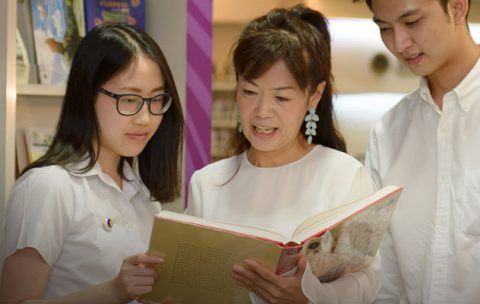
The Intercultural Studies and Languages major aims to be innovative in its design and responsive to today’s rapidly changing world while remaining faithful to the ideals of the liberal arts tradition.
Personnel
Highly-qualified international staff

Trilingual Problem-Solving Approach
Task-based and communicative teaching approach oriented to find solutions to current problems and to successfully communicate in at least 3 languages

Exclusive ICIC Program
Spearheading the ICIC program, which is not offered anywhere else in Thailand

Flexible Liberal Arts, Global Faculty
A genuine, flexible and high-standard liberal arts program with diverse international faculty who offer learning opportunities in small groups in- and outside the classroom

The Bachelor program in Intercultural Studies and Languages aims to be innovative in its design and responsive to today’s rapidly changing world by fostering cultural appreciation, critical thinking skills, ethical leadership and creative problem solving through collaboration. Thanks to its interdisciplinary nature aimed at promoting global citizenship, this program allows students to develop their cross-cultural communication proficiency as well as the ability to critically analyze and synthesize information, engaging with diverse perspectives to deepen understanding and develop informed viewpoints.

Cultural Diversity & History
Understand cultural diversity through various cultural contexts and their respective histories.

Intercultural Negotiation Skills
Demonstrate cultural sensitivity in intercultural negotiation and mediation.

Self-Driven Success
Take personal responsibility for their studies/work by developing intrinsic motivation and creativity to achieve success.

Critical Thinking & Lifelong Learning
Apply analytical and critical thinking skills to become independent, active lifelong learners.

Ethical Global Communicators
Use cultural awareness, ethics, and advanced communication skills to contribute to academic and professional fields.

Multicultural Teamwork
Employ collaboration and teamwork skills effectively within culturally diverse groups.
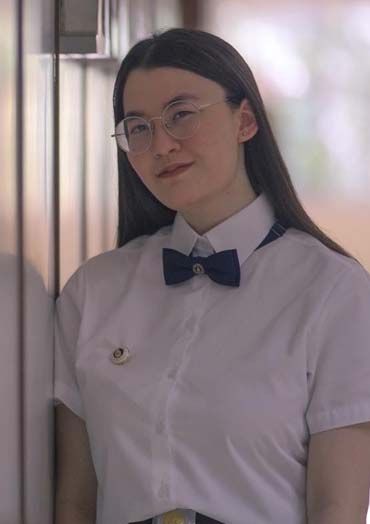
MUIC has everything I have been looking for. Studying in a leading liberal arts university has provided me the chance to learn about different fields outside of my area of study to find what I truly like. I have joined many extracurricular activities as well as being a part of the Student Association which gave me many treasured experiences that I cannot find elsewhere. MUIC helps me to find my highest potential to become the best person I can be.
Zoe Morrison
MUIC has everything I have been looking for.
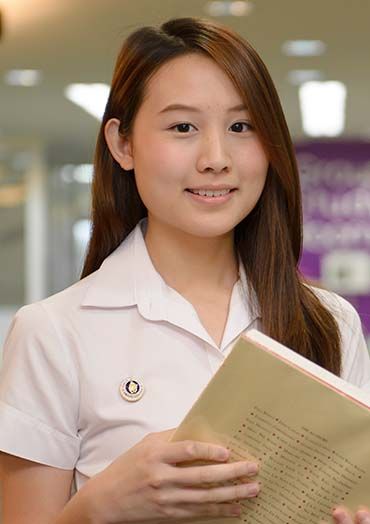
Before I entered university, I wasn't sure of who I wanted to be and what I would become in the future. MUIC offers liberal arts education where you get to explore a wide range of subjects and get to discover what you are good at. With help from professors and friends, I finally found that answer. MUIC truly brings out the best in you.
Pansaya Akarapan
Before I entered university, I wasn't sure of who I wanted to be and what I would become in the...

I gained a lot of knowledge and experience in MUIC by being part of the Student Association during this past year when everyone was affected by the pandemic. In addition, I have met new friends from all over the world which might be beneficial for me in the future. The most important thing that MUIC has done for me is enabling me to reach the highest standards so that I could become a better person.
Sarisa Srisukprasert
I gained a lot of knowledge and experience in MUIC by being part of the Student Association during...